
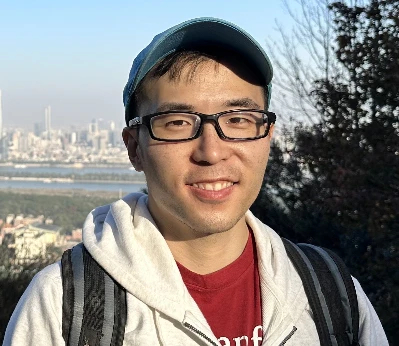
Stephen Shang, PhD, is a data scientist working at the intersection of machine learning, biomedical imaging, and applied generative AI. At the South Florida Proton Therapy Institute, he develops production machine learning and computer vision methods for adaptive proton therapy, including CT/CBCT surface mapping, 3D reconstruction, and predictive modeling to identify anatomical changes and support resimulation decisions. His current work focuses on integrating DICOM imaging, GPU-accelerated geometric analysis, and clinical data into tools designed for real-world radiation oncology workflows.
His broader work also explores agentic AI, retrieval and evaluation systems, provenance-aware information processing, and reliable LLM workflows, with an emphasis on making AI systems more useful, auditable, and robust in complex real-world environments.
Stephen completed his PhD in Biochemistry and Molecular Genetics at the University of Virginia, where he studied epigenomic mechanisms of chemoresistance, followed by a postdoctoral fellowship in Bioengineering at Stanford University, where he developed integrative bioinformatics approaches involving Hi-C and CRISPR technologies. His research spans computational biology, epigenomics, medical imaging, radiation oncology, and applied AI, with publications in Nature Computational Science, Molecular Cell, and Cancer Research.
In his spare time, he enjoys climbing, learning new machine learning methods, and experimenting with generative AI models.
Disclosures:
- Employment: South Florida Proton Therapy Institute:Data Scientist:Employee
- Compensation: :Role Topic Description-End Date:
- Ownership: none
- Leadership: none