
Main Session
Sep
30
QP 40 - Personalized Therapy and Special Populations in Head and Neck Cancer
1239 - Stereotactic Ablative Radiotherapy (SABR) for Early Stage Glottic Cancer: A Multi-Institutional Pooled Analysis of Long-Term Efficacy, Toxicity and Voice Outcomes
Presenter(s)
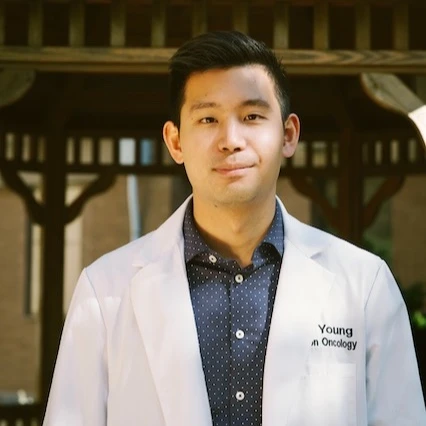
Sympascho Young, MD, BS - UT Southwestern Medical Center, Dallas, TX
S. Young1, D. H. Moon1, C. Y. Liao1, M. H. Lin1, L. Childs2, P. D'Urso3, V. Landoni3, S. Dhar2, M. D. R. I. Bottero3, L. Goanta3, D. J. Sher1, and G. Sanguineti3; 1Department of Radiation Oncology, University of Texas Southwestern Medical Center, Dallas, TX, 2Department of Otolaryngology, University of Texas Southwestern Medical Center, Dallas, TX, 3Department of Radiation Oncology, IRCCS Regina Elena National Cancer Institute, Rome, Italy
Purpose/Objective(s):
Standard radiotherapy for early stage glottic cancer (ESGC) irradiates the whole larynx over 4-6 weeks. Stereotactic ablative radiotherapy (SABR) is a promising strategy for reducing irradiated volume and shortening treatment time in ESGC, but only small trials or series have been reported.Materials/Methods:
We performed a patient-level pooled analysis of ESGC patients from 2 institutions (UTSW and IRE), most (83%) treated on prospective trials. Eligible patients had Tis-T2N0M0 glottic laryngeal squamous cell carcinoma, received =5 fractions, and had no prior curative laryngeal radiation or surgery. All underwent CT neck and/or PET/CT staging. SABR regimens were 36/30 Gy or 30/27 Gy in 3 fractions every other day (IRE) or 42.5 Gy in 5 fractions twice weekly (UTSW). PTV margins were 3 mm circumferentially and 5 mm craniocaudally. Patient, treatment and dosimetric factors were analyzed. Univariable logistic regression was conducted to assess associations with toxicity and recurrence; linear effects model evaluated VHI over time.Results:
87 patients were included, with 49 (56.3%) and 38 (43.8%) treated in 5 and 3 fractions, respectively. Median follow-up was 5.0 years (IQR 3.6 – 6.5). Three patients (3.4%) were Tis, 57 (65.5%) were T1a, 23 (26.4%) were T1b, and 4 (4.6%) were T2. Fifty-free (60.1%) patients had tumors involving the anterior commissure (AC). Median age was 68 years (IQR: 61.5 – 73.5) and 74 (85.1%) were male. There were 22 (25.3%) active and 44 (50.6%) former smokers, with median 35 pack years (IQR: 17.5 – 45.0). Patients were treated by LINAC-based VMAT/IMRT in 76 (87.4%) and by Cyberknife robotic SBRT in 11 (12.6%) cases. The median high-dose PTV volume was 4.6 cc (3.0 – 6.0). The 5-year cumulative incidence of local recurrence, regional recurrence and distant metastasis were 2.6%, 1.2%, and 1.2%, respectively. Ultimate 5-year local control (after surgical salvage) was 100%. The 5-year probability of overall and progression-free-survival were 92% and 89%, respectively, with 100% laryngeal preservation probability. Mean VHI improved significantly from a baseline of 34.2 (95% CI: 24.5 – 43.9) to 18.4 (95% CI: 8.1 – 28.7) and 20.4 (95% CI: 9.7 – 31.1) at 1 and 2 years, respectively (p<0.001). Late tissue necrosis occurred in 10 (11.5%) patients and was significantly more frequent in those actively smoking versus not smoking after treatment (33% vs 6.9%; p=0.012). Necrosis resolved in 90% of patients, with median duration of 5.2 months (IQR: 2.8 – 12.3). On univariable analysis, active smoking predicted for late necrosis (OR 6.7, p=0.008), and sarcomatoid histology predicted for recurrence (OR 166, p=0.0013).Conclusion:
SABR in 3 to 5 fractions provides excellent locoregional control for ESGC. Rates of late necrosis are acceptable in non-active smokers but high in active smokers. Patient selection is critical, and SABR should be pursued cautiously for active smokers and sarcomatoid histology. Comparative prospective randomized trials are warranted to validate this paradigm.